Background
Medieval feasting and mead
What a feast meant in medieval Ireland, why mead matters, what a great hall was for, and what the castle banquet adds to the picture.
Book the castle banquet ↗Quick answer
A medieval Irish feast was an act of hospitality in a great hall, with meat from the cauldron or spit, honey, and mead. Mead was a popular drink in medieval Ireland, and a banquet hall at Tara was known as the house of the circling of mead. Bunratty's banquet recreates the mood in a modern four-course dinner rather than a reconstructed menu.
Feasting as hospitality
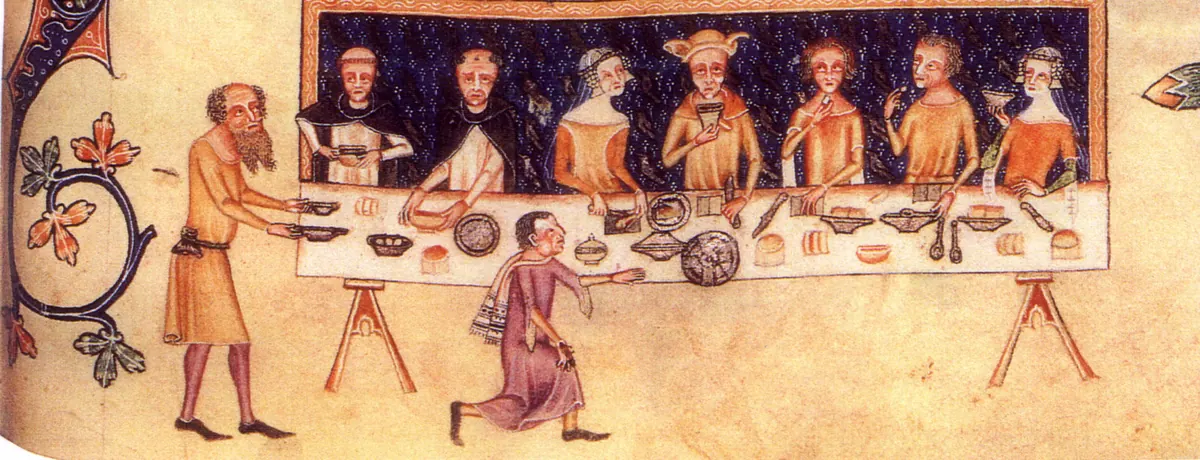
Wikipedia says hospitality was compulsory for all free landowners in early Ireland, who were expected to welcome kings, bishops and judges into their homes, and that much of the evidence for early Irish food survives in law texts and poetry written down from the 7th and 8th centuries onwards. A feast was therefore a duty as well as a pleasure. That helps explain why a castle banquet, with a host who welcomes guests from many places, feels so natural a format.
Meat, cauldrons and spits
Early Irish sources describe meat boiled in a cauldron and also roasted on spits, according to Wikipedia. Salted beef went into stews, and one poem describes pieces of beef, mutton and ham roasted on whitebeam spits after being marinated in salt and honey. Dairy foods, which Wikipedia says were known as white foods, were staples. None of this tells you what is on a plate at the banquet. It does show how far a modern dinner sits from the medieval table.
Honey and mead
Honey was a precious but abundant commodity, Wikipedia says, and beekeeping was particularly associated with the church. Mead, from honey fermented with water, was a popular drink in medieval Ireland. Wikipedia adds that a banquet hall on the Hill of Tara was known as Tech Mid Chuarda, the house of the circling of mead, and that mead was often infused with hazelnuts. The banquet's welcome toast with mead belongs to that tradition, even if the drink itself is a modern one.
What a great hall was for
Wikipedia describes a great hall as the main room of a medieval castle or large house. It was a multi-purpose room, used for receiving guests and for the household to dine together, and a dais at one end held the high table. At Bunratty the banquet is staged in the Great Hall, which is the right room for the job. The castle's own description is of an evening that recaptures the lifestyle of medieval Ireland through food, music and song.
What the banquet adds and leaves out
The banquet adds a host, the Earl's Butler, and singers who perform between courses. It leaves out the cauldron and the spit. The castle describes a four-course dinner, and nothing on its banquet page claims the dishes are reconstructed from 15th-century recipes. It also dates the banquets to 1963, which makes the tradition a 20th-century one set in a 15th-century building. Enjoy it as that: a themed evening with a real setting.
What to expect in the cup
How sweet a mead tastes depends on the maker. Wikipedia says that, despite a common misconception, mead can be dry or semi-sweet as well as sweet, and that it can be still or sparkling. The castle's banquet page names its own mead on the menu and says guests can also have red or white wine and water. If you are not a drinker, say so at booking and ask the staff on the night.
Frequently asked questions
What is mead?
Mead is an alcoholic drink made by fermenting honey with water. Wikipedia says it can be sweet, semi-sweet or dry.
Was mead really drunk in medieval Ireland?
Yes. Wikipedia says mead was a popular drink in medieval Ireland, and that a banquet hall at Tara was called the house of the circling of mead.
Is the banquet menu medieval?
The castle describes a four-course dinner and does not say the dishes are reconstructed from 15th-century recipes. Treat the menu as a modern dinner in a medieval setting.
Sources